
05 · Bahia & Brasília, Brazil · 1960s
Afro-Brazilian Geometric Symbolism
Brazil's geometric abstraction movement prized cool, mathematical form. One painter from Bahia took that same crisp geometric language and filled it with something the movement hadn't planned for: the visual signs of Candomblé, an Afro-Brazilian spiritual tradition carrying West African roots. The result argued that "universal" abstraction could also be specific, sacred, and rooted in a particular ancestry.
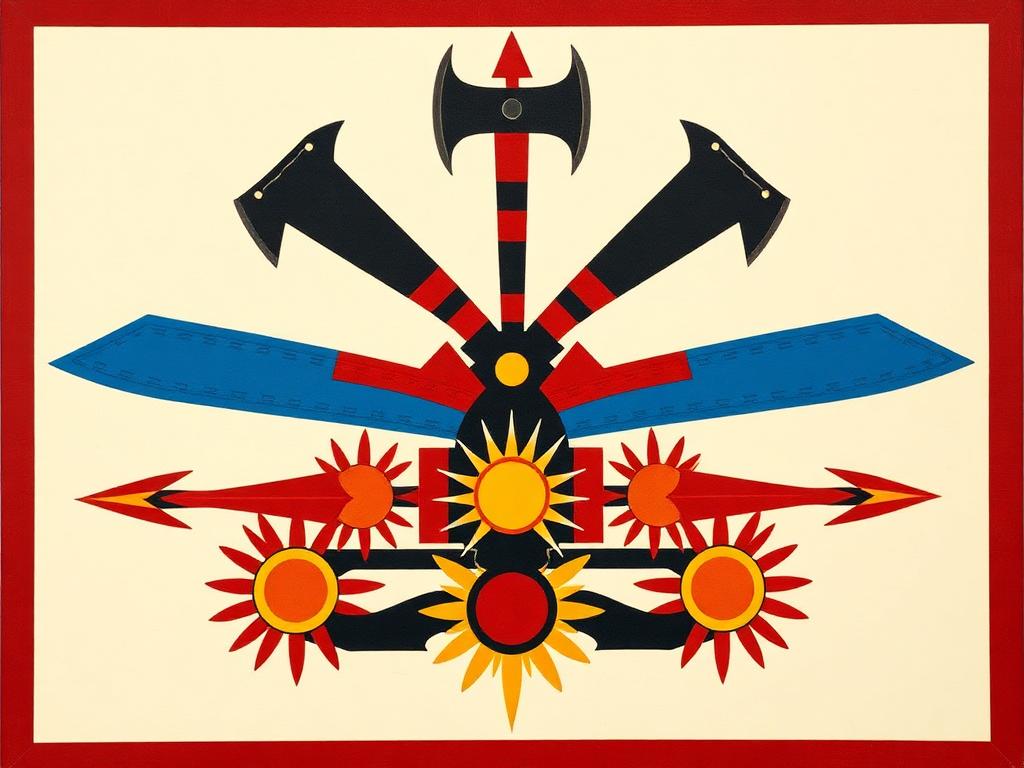
Rubem Valentim
1922–1991
Valentim grew up in Salvador, Bahia, surrounded by Candomblé's ceremonial objects and symbols, and spent his career translating them into hard-edged geometric paintings and reliefs he called "emblems" — a double-headed axe standing for the orixá of thunder and justice, arrows, suns, and altar-like totem forms. A 1966 trip through Europe and to the First World Festival of Negro Arts in Dakar deepened his conviction that this symbolic language belonged in modern art, not outside it.
Look for
- hard-edged geometric shapes
- sacred emblematic symbols
- radial totem-like symmetry
- disciplined primary + earth palette
- the feel of an altar, not a picture
You've walked the cycle for 05.
Now take that language into the lab: pick your layers, roll the dials, and pull prompts in this style — always carrying Diaspora imagery.