
06 · Harlem & New York City · 1963–1967
Pop-Cubist Social Portraiture
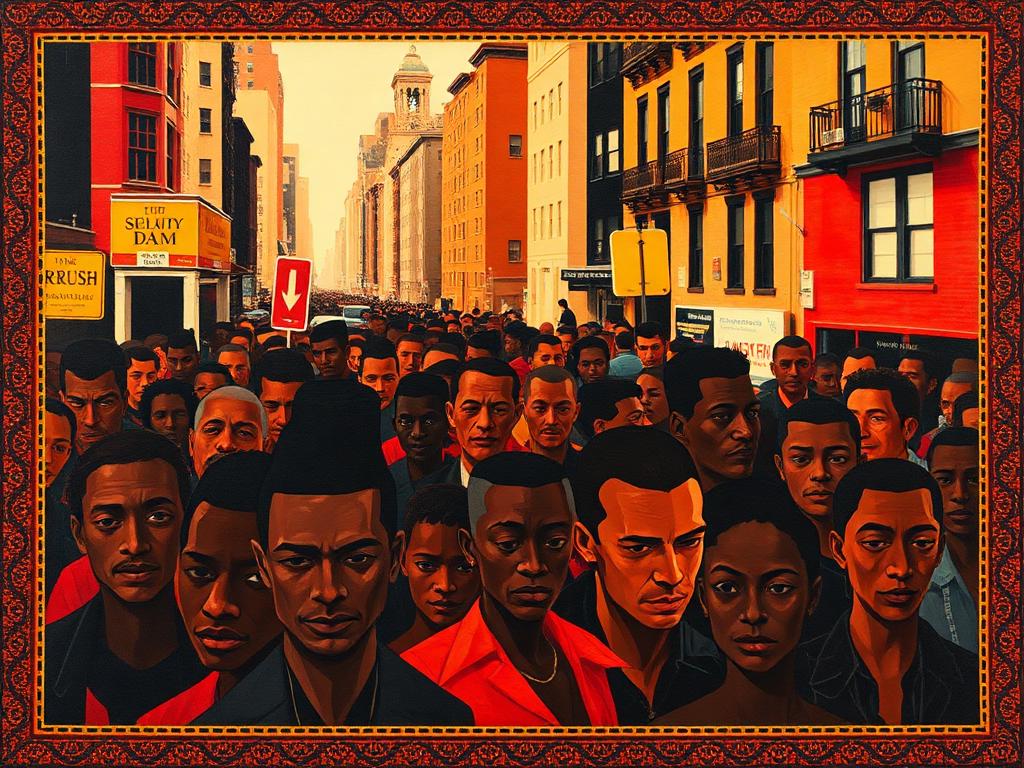
One painter spent the years of the March on Washington and the Civil Rights Act building a twenty-canvas series that put pop art's flat, graphic confidence in direct conversation with the political urgency the movement demanded — proof that "pop" and "protest" were never as far apart as the era's art history books suggested.
Faith Ringgold
1930–2024
Ringgold began her American People series in 1963, fusing post-cubist figuration, pop art's hard flat edges, and the patterning of West African textiles and sculpture into paintings that confronted race and gender head-on. She later became internationally known for her narrative story quilts, but the 1960s paintings were where her visual language — bold, flat, unflinching — first took shape.
Look for
- flat unmodulated color blocks
- angular cubist-influenced figures
- high-contrast confrontation
- textile-patterned borders
- frozen mid-action composition
You've walked the cycle for 06.
Now take that language into the lab: pick your layers, roll the dials, and pull prompts in this style — always carrying Diaspora imagery.