
07 · Harlem, New York City · 1964 onward
Harlem Photomontage Narrative
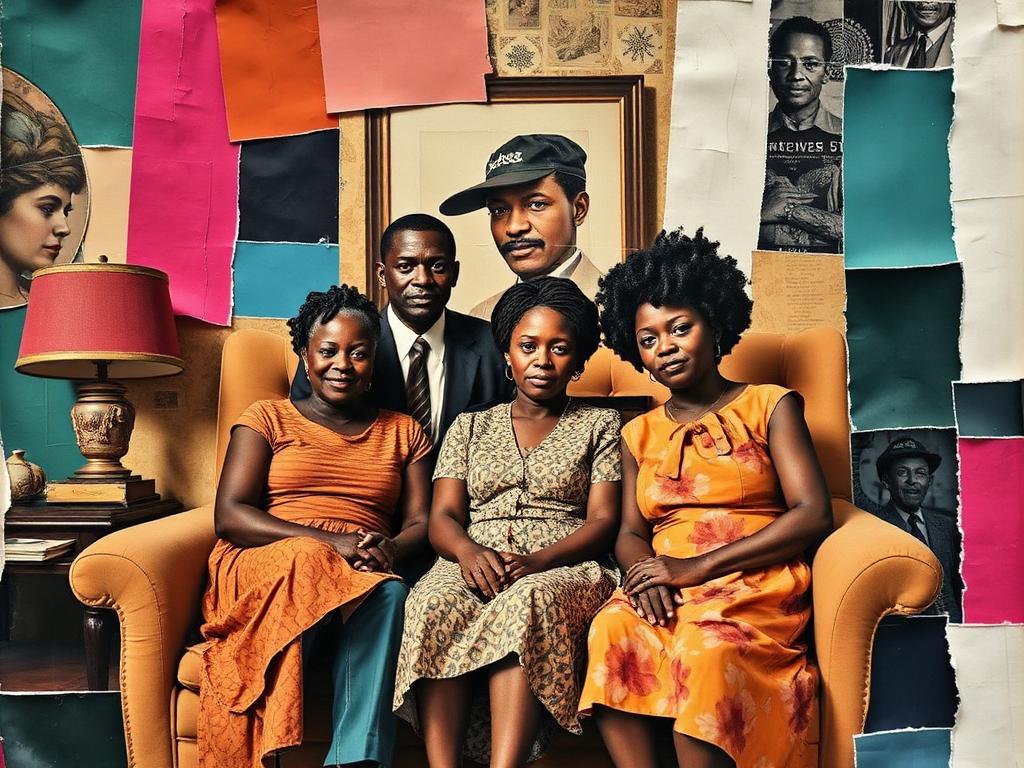
In the mid-sixties a circle of Harlem artists turned to scissors and paste as a serious medium. Cutting up magazine photographs, fabric scraps, and printed color, they built scenes of Black daily life whose seams stayed visible on purpose — a face assembled from four different people's features, a room that shifts scale from wall to wall. The fracture was the argument: a community's story is stitched from pieces, and the stitching is part of the beauty.
Romare Bearden
1911–1988
Bearden convened the first Spiral meeting in his studio, then spent the years that followed inventing a collage language of his own — enlarged photostat fragments, torn magazine color, and painted passages combined into rituals of Southern and Harlem life: a baptism, a train, a woman at a window. He worked like a jazz arranger, repeating and varying motifs across a picture, and insisted that abstraction and Black memory could occupy the same surface.
Look for
- visible torn and cut edges
- mismatched scale between parts
- photographic fragments beside painted color
- patchwork quilt geometry
- repeating motifs, varied like a jazz chorus
You've walked the cycle for 07.
Now take that language into the lab: pick your layers, roll the dials, and pull prompts in this style — always carrying Diaspora imagery.