
09 · Jamaica, Haiti & the wider Caribbean · 1950s–1970s
Caribbean Intuitive Modernism
Across the Caribbean, self-taught painters — farmers, preachers, woodcarvers — built a modernism nobody had licensed them to make. Curators eventually called it "intuitive," a word that undersells the rigor: flattened space, saturated tropical color, spiritual and folk narrative treated as history painting. The work insisted that the island's own visual imagination was the subject, not a rustic footnote to somebody else's canon.
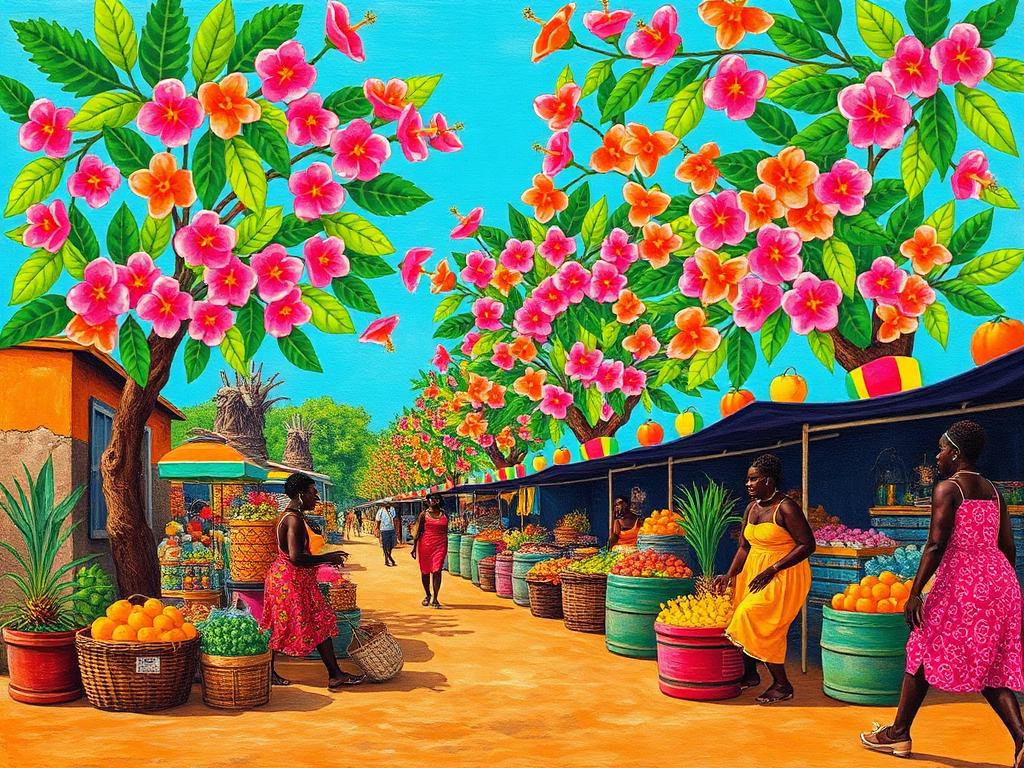
Everald Brown
1917–2003
Brown was a Rastafarian elder in rural Jamaica who painted, carved instruments, and built altars as one continuous practice. His canvases fill with birds, doves, mountain landscapes, and radiating spiritual light, drawn with a decorative evenness that gives every leaf and feather the same care. He treated painting as devotional work — the picture was a place to be entered, not a scene to be looked at from outside.
Look for
- flattened, even perspective
- saturated tropical color
- decorative repeating foliage
- spiritual light radiating outward
- every detail given equal care
You've walked the cycle for 09.
Now take that language into the lab: pick your layers, roll the dials, and pull prompts in this style — always carrying Diaspora imagery.